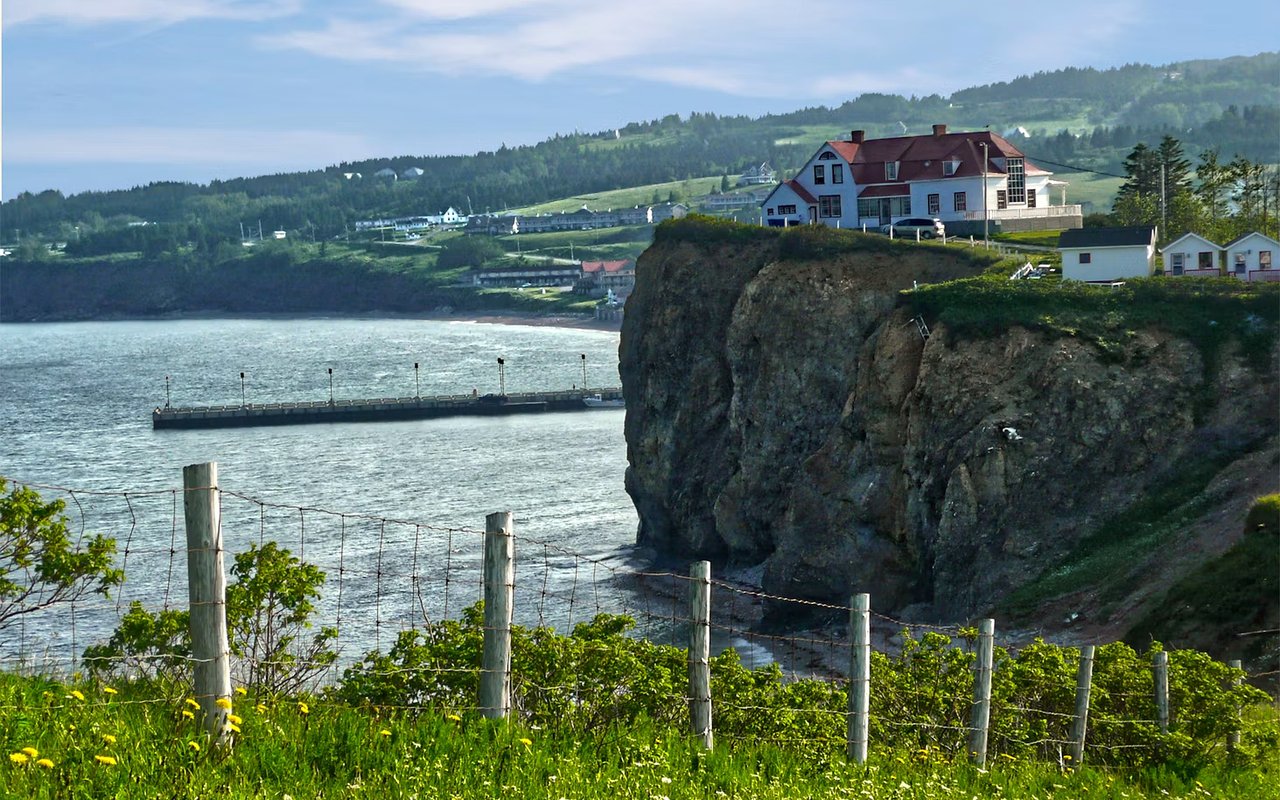

If you drive Highway 1 through Carmel Highlands with any regularity, you already know the building. It sits on a bluff above Rocky Point, roofline low against the sky, parking lot usually empty except for the occasional car pulled over for a photo. The sign is still up. So are the memories, if you're old enough to have had a sunset drink on that deck and watched for whale spouts between courses.
Everyone who lives along this stretch of coast has their own version of the question by now. Why is it still dark? The easy answer, the one that's been circulating since the pandemic, goes something like this: the property changed hands, and the restaurant never reopened. That story isn't wrong exactly. It's just missing the one detail that actually explains a wait now stretching past six years, and that detail has nothing to do with money or menus.
The version most of us already believe
Rocky Point Restaurant opened in 1947 on 2.5 acres on the apron of Palo Colorado Canyon, tucked between Bixby Bridge and Rocky Creek Bridge. For decades it was the stop between Carmel and Big Sur, the place you brought out-of-town guests for crab sliders and a view that made the food beside the point. Peter and Grace Wang bought the property in 2012 for $4.7 million and put close to $1 million into renovations. The restaurant closed during the 2020 pandemic shutdowns and never reopened under their ownership.
In November 2021, Esperanza Carmel, the real estate firm run by Patrice Pastor, bought the site for a reported $8 million, though the final sale price later came in at $7.9 million. The announcement was the kind that gets a neighborhood's hopes up. Esperanza paired with David Fink, CEO of Mirabel Hotel & Restaurant Group, whose portfolio includes Cantinetta Luca and L'Auberge Carmel, and Justin Cogley, who at the time held the only Michelin star in Monterey County as executive chef at Aubergine. Fink isn't a stranger to this exact stretch of coast. He made his name locally running the old Highlands Inn, now the Hyatt Carmel Highlands, and lived roughly a decade in Palo Colorado Canyon, close enough to the restaurant to walk there. He has also served as a board member and past president of the Big Sur Land Trust.
Given that lineup, the natural assumption was a year, maybe two, of construction and a reopening under a bigger name. That was 2021. It is 2026, and the doors are still shut.
What actually happened in 2018
As Alex Brant's reporting on Rocky Point's closure explains, the gap between that expectation and the reality traces back to before Esperanza ever owned the property. In 2018, the California Coastal Commission opened an investigation into locked gates and private property signage that were restricting public access to the Rocky Point shoreline. When Esperanza bought the property in 2021, it inherited those unresolved violations along with the deed.
The California Coastal Act treats public access to the shoreline as close to non-negotiable for property along this coast, which means a new owner can't simply fix the kitchen and reopen. The violations had to be resolved first, and that meant working through a public regulatory process rather than a private renovation budget. It took until May 2024 for Esperanza to reach a tentative agreement with Coastal Commission staff, and the Commission didn't formally vote to clear the violations until June 14, 2024, at a meeting in Morro Bay.
Here's the timeline laid out plainly, with the key dates in one place:
| Year | What happened |
|---|---|
| 1947 | Rocky Point Restaurant opens on the bluff above Rocky Point |
| 2012 | Peter and Grace Wang buy the property for $4.7 million |
| 2018 | Coastal Commission opens investigation into locked gates restricting shoreline access |
| 2020 | Restaurant closes during the pandemic |
| Nov 2021 | Esperanza Carmel buys the property for a reported $8 million (later reported at $7.9 million); Fink and Cogley partnership announced |
| May 2024 | Esperanza reaches tentative agreement with Coastal Commission staff |
| June 14, 2024 | Commission formally votes to clear the violations at its Morro Bay meeting |
| 2026 | Restaurant remains closed; county review of next steps ongoing |
Close to three years passed between the sale and the vote that finally cleared the violations, and even after that vote, the county still hasn't finished reviewing what comes next. That's the part of the story that gets lost when people reduce this to a question of when the owner will reopen.
What still has to happen before anyone eats there again
Resolving the violations wasn't a matter of Esperanza paying a fine and moving on. The agreement reached with Commission staff requires the removal of unpermitted construction on the site, restoration of native habitat, upgrades to public access points, and conservation easements recorded against much of the property that will limit future development permanently. In other words, whatever eventually reopens on that bluff will operate under real restrictions on how much of the site can ever be built out, restrictions that exist specifically to keep the shoreline open to anyone who wants to walk down to it, whether or not they ever buy a meal.
Fink has been publicly direct about not minding that trade. His history with the Big Sur Land Trust suggests he sees the public access requirement as part of what makes the site worth having, not an obstacle to route around. Esperanza's own page on the project says only that it hopes to eventually share the development team's plans for the property, with no firm date attached, language that, six years into this process, longtime neighbors have learned to read with some patience.
What you can actually do on that stretch right now
The good news for anyone who lives nearby is that the closure hasn't meant the land is off limits. Esperanza has confirmed that even with the restaurant not operating, the property remains open to the public to enjoy the trails and the views, which is more than can be said for a lot of privately held coastline in this county.
A few hundred yards down the highway, Garrapata State Park offers the same kind of access with a clearer set of rules. The Soberanes Canyon Trail runs 1.25 miles one-way from the main trailhead at Gate 8 on the east side of Highway 1, climbing from chaparral into a redwood canyon. If you're planning a walk this season, a few things worth knowing before you go:
- The Rocky Ridge segment that connects to Soberanes Canyon is currently closed due to hazardous conditions, so plan on an out-and-back hike rather than a loop.
- Dogs on leash are only permitted at Gate 19, on the beach at the park's south end, and on the trails leading to it. They aren't allowed in the Soberanes Canyon area.
- Parking is informal gravel turnouts along Highway 1, numbered rather than mapped, and they fill fast on clear weekends.
None of this requires a reservation or a fee. It just requires knowing which gate does what, which is the kind of thing you learn by living here rather than by reading a single trailhead sign.
Why this matters more than a reopening date
The instinct is to treat Rocky Point as a waiting game, another countdown to a grand reopening announcement. But the more accurate way to see it is as a working example of how this coastline actually gets protected. The same Coastal Act process that has kept a beloved restaurant dark for six years is the reason the bluffs, the coves, and the turnouts along this same mile of highway haven't been fenced off, built up, or sold into private hands one parcel at a time. It's slow because it's designed to be slow, and the slowness is doing something.
If you've been telling the story as simply a change of ownership followed by a long closure, it might be worth adding what came next. The building's continued closure has less to do with who owns it than with the public process that had to be completed first. Reopening it the right way, on this particular piece of coast, was never going to be quick.
For more on what makes daily life in Carmel Highlands distinct from its neighbors along the Peninsula, the Carmel Highlands neighborhood guide has additional context on the area. And if a walk past Rocky Point ever turns into a bigger conversation about property here, Katy Harrison is always glad to talk through what ownership on this stretch of coast actually looks like.
This article is general information, not legal, tax or financial advice. Consult a qualified professional about your situation.